

2007: The Skåne Initiative – a new energy goal
In 2007, we joined the Skåne Initiative—a voluntary energy-saving project led by Sweden’s public housing sector. This later became the Climate Initiative, which we and several of our colleagues in the public housing sector now follow. The main goal is to reduce the environmental impact and energy consumption in apartment buildings.
2008–2016: Building renovations with energy-saving measures
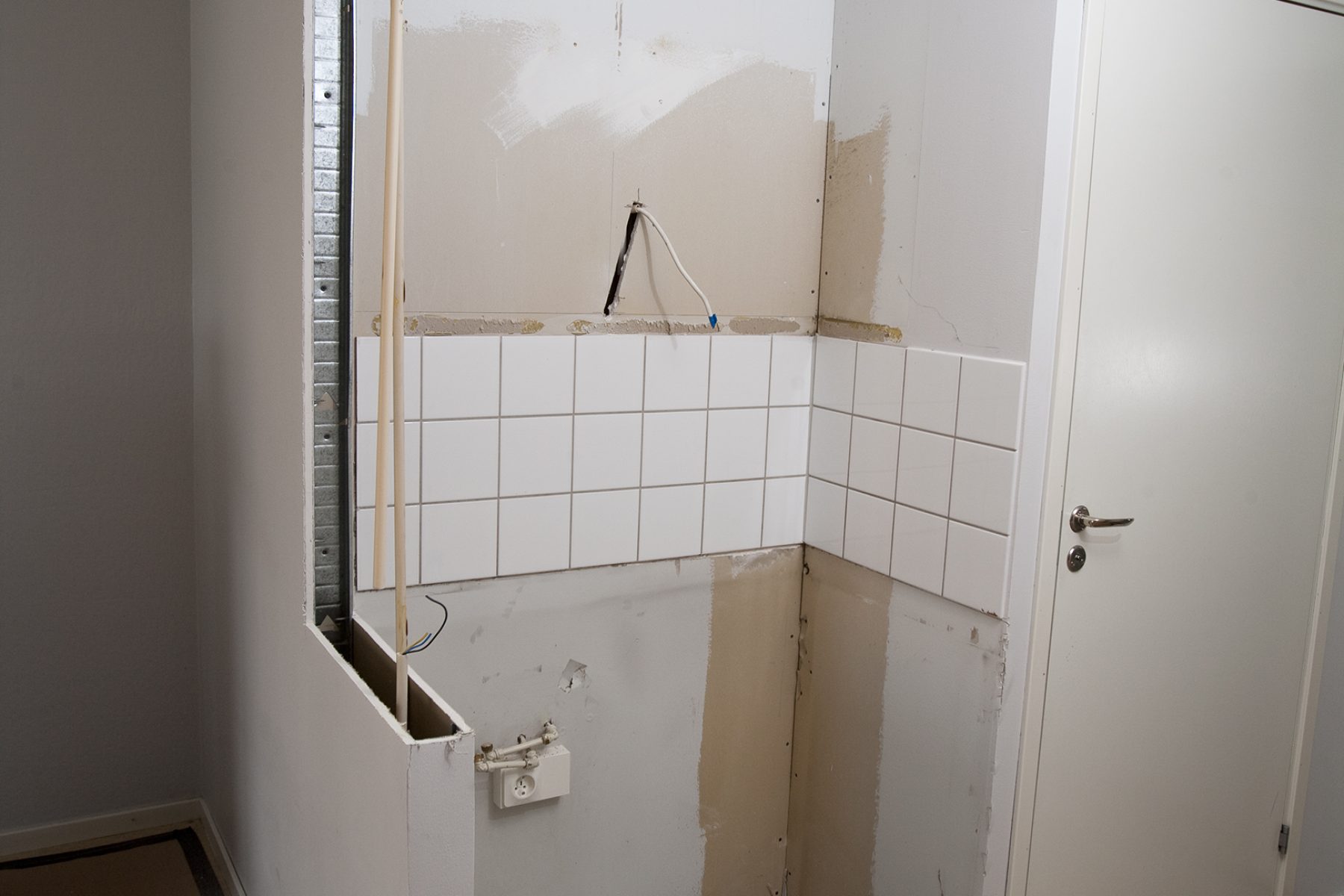
As part of the main pipeline renovations, which were carried out to replace pipes and reduce the risk of water damage, we also implemented several energy-saving measures. Among other things, we installed more water-efficient faucets, showers, and toilets, which reduced both water consumption and the need to heat hot water. We also switched to more energy-efficient pumps and improved pipe insulation to reduce energy losses.
2010 – present: Connected properties
As fiber-optic cables were being installed in our buildings, work began on connecting our sub-control centers. We can now monitor and control the heating in our buildings digitally instead of manually on-site. This allows us to detect anomalies more quickly and correct them before they significantly affect the indoor climate or the building’s energy consumption.
Illustration: Icons created by Sweden's public service sector
2014: Fältspaten – Sweden’s largest passive house-certified residential building
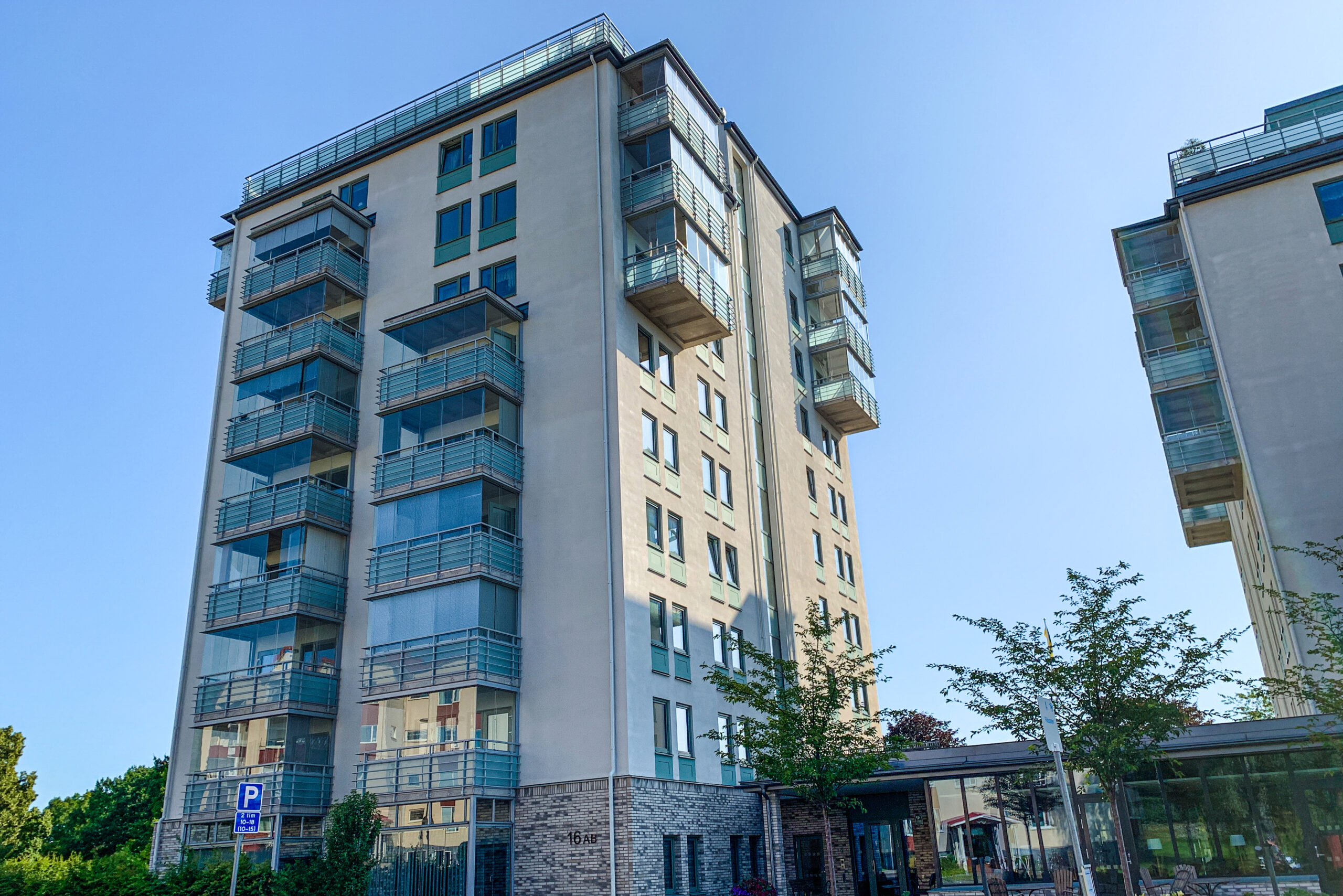
Fältspaten In 2014, it became Sweden’s largest passive house-certified residential building. The property was built to meet high standards for both low energy consumption and sustainability through the FEBY12 and Miljöbyggnad Guld certifications. Its energy-efficient design means the building uses significantly less energy for heating than traditional buildings. Additionally, “ Fältspaten ” was the first of its kind to feature a geothermal heating system for both space heating and hot water.

2014 – present:
LED lighting
By switching to occupancy-sensor-controlled LED lighting in most of our common areas—such as stairwells and laundry rooms—we have collectively saved electricity. The reason for the switch, which began in 2014, is that mercury-containing light sources are to be phased out in accordance with an EU decision. In addition to reducing energy consumption through smart control of lighting and occupancy, LED lighting also has a longer lifespan. This means fewer bulb replacements and more resource-efficient maintenance.
2016: An overarching system collects information from the properties
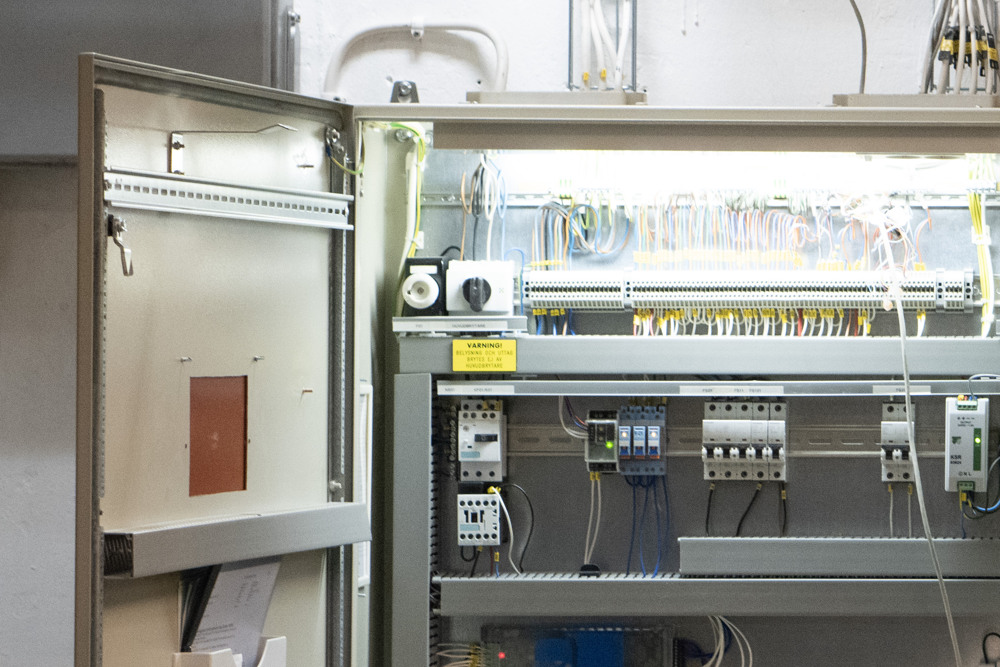
In 2016, Skövdebostäder began compiling information from the digital substations in our properties into a single, overarching system. This system offers additional features for improved property management and the potential to reduce energy consumption—for example, because we can optimize our systems to maintain temperatures that are as consistent as possible. Hopefully, we’ll also have happier tenants thanks to a more comfortable indoor climate. The system is still in use and is being continuously developed.
2016 – present: Solar panels in all new construction
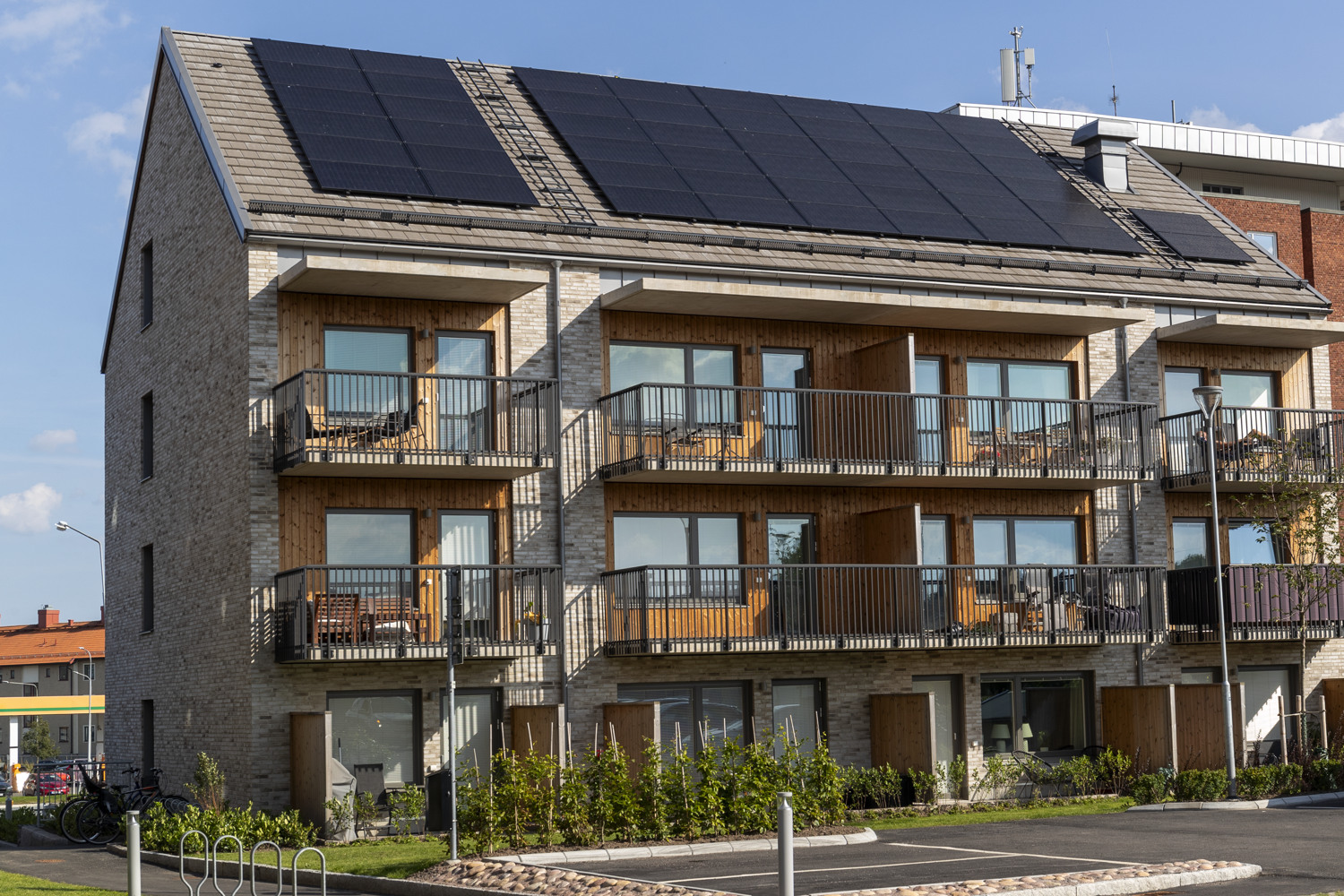
Since 2016, Skövdebostäder has been installing solar panels in all new construction projects. The basic idea is that the solar panel systems should be sized to meet the property’s needs, so that the electricity generated is consumed within the building.
2020 – and beyond: Solar panels in existing buildings
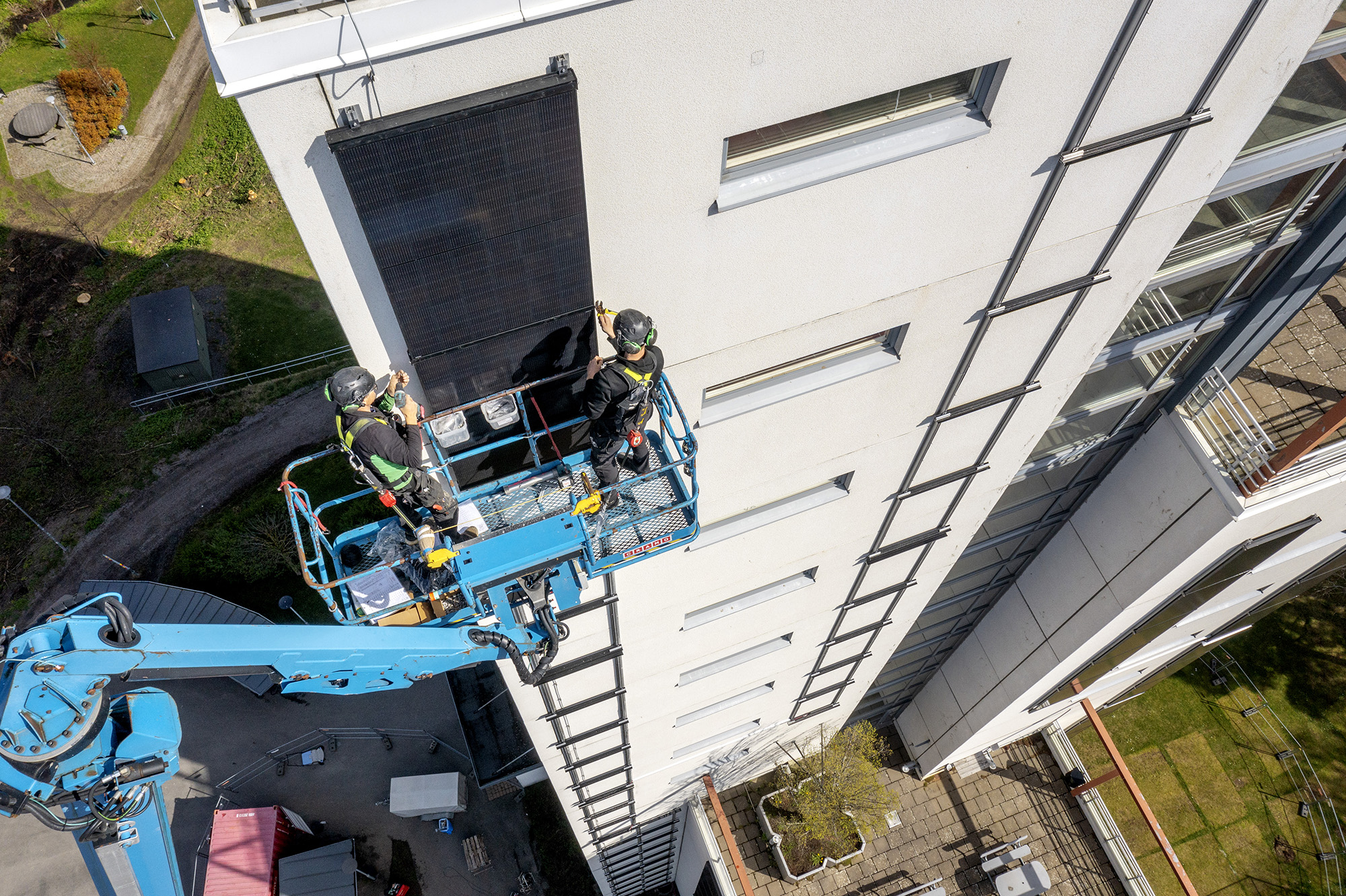
In 2020, we began work on installing solar power systems in Skövdebostäder’s existing housing portfolio as well. Currently, we have 940 kWp of installed capacity, which generates approximately 860 MWh of electricity per year. By generating some of our own electricity, we use our resources more efficiently. This reduces our energy costs, makes us less vulnerable to high electricity prices, and contributes to the long-term financial sustainability of our properties—something that benefits both current and future tenants.
2023 – and beyond: Water conservation measures
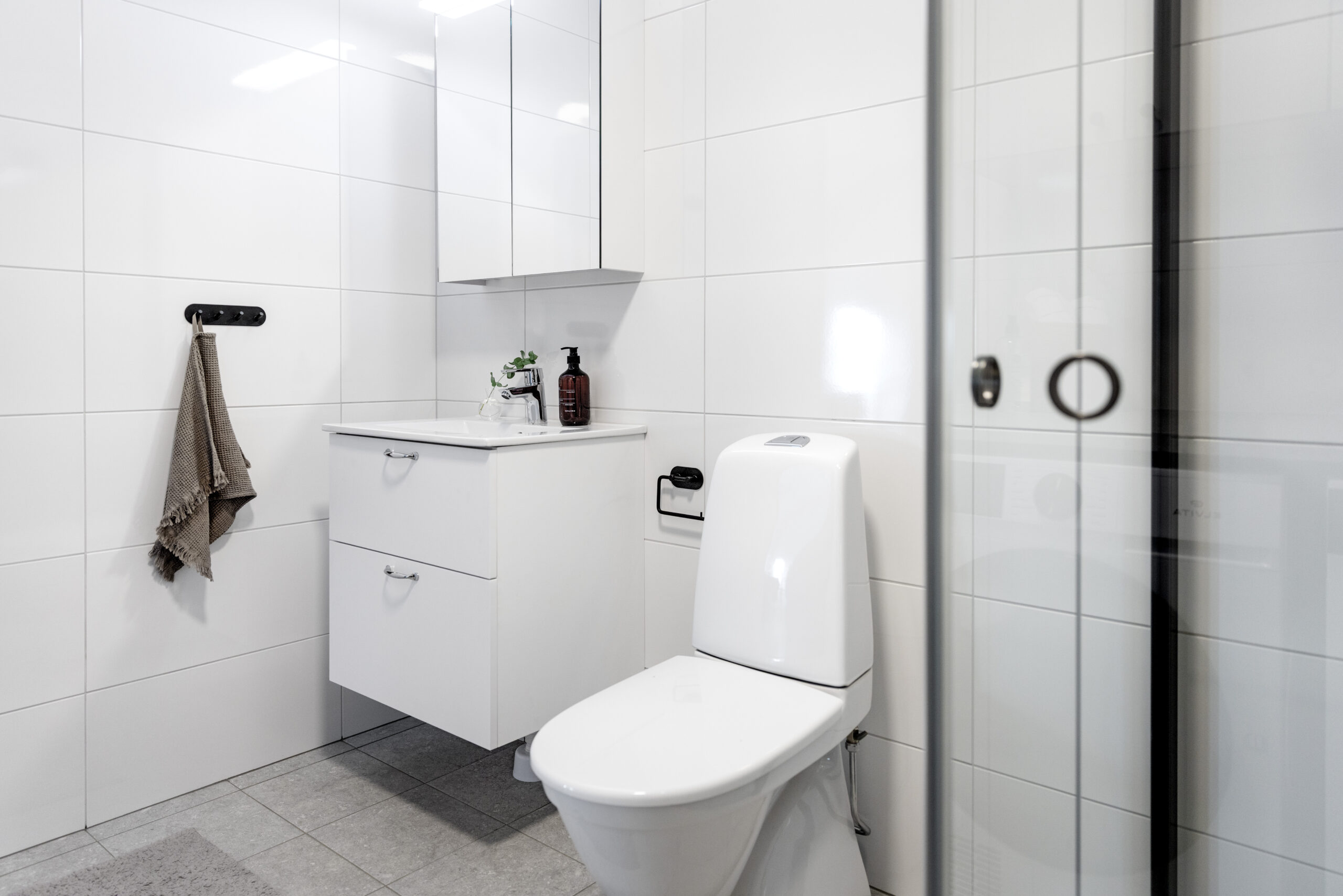
To reduce water and energy consumption, Skövdebostäder requires water-efficient products in its purchasing. This includes kitchen faucets, sinks, showers, and toilets that use less water without compromising performance. This effort is ongoing and helps lower water consumption while also reducing the amount of energy needed to heat water.
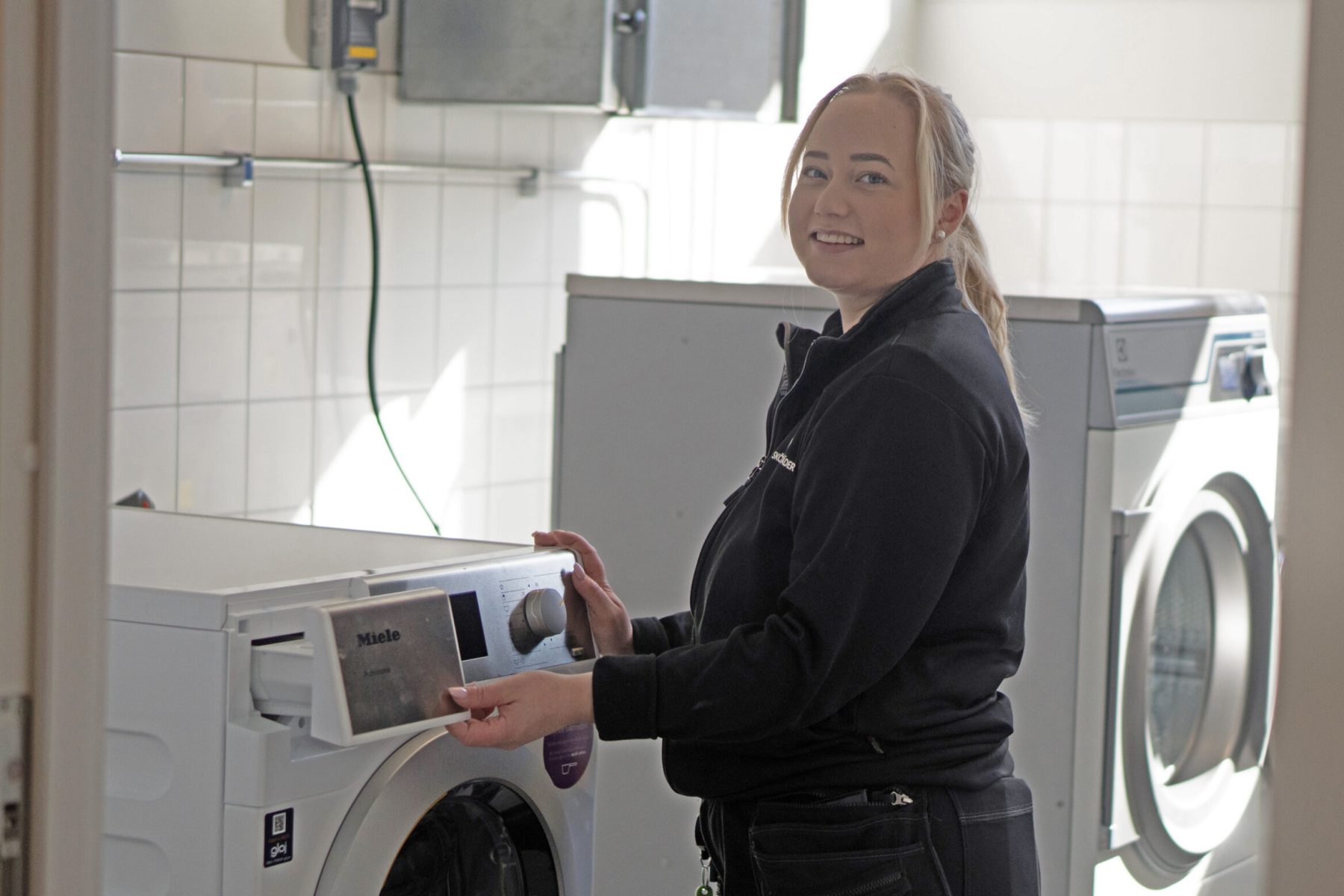
2024: More Energy-Efficient Laundry Rooms
Thanks to the renovation of the washing machines in our laundry rooms, which was completed in 2024, each wash cycle has been shortened by about 15 minutes. Instead of the machines having to heat the water themselves using electricity, hot water is now supplied directly. Since the water is heated using district heating, this solution also contributes to more efficient energy use.
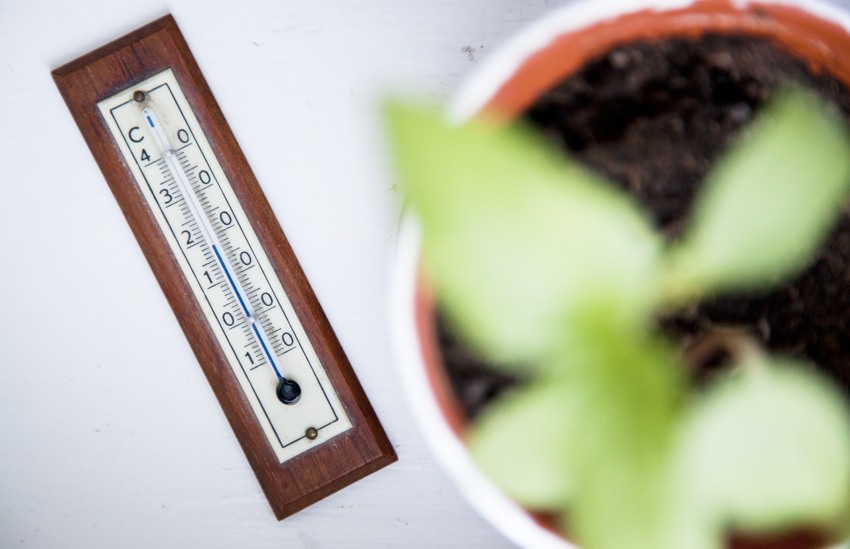
2025: Room-by-room heating control in all buildings
We measure the indoor temperature in our apartments to ensure it is at the correct level. If it deviates from the recommended indoor temperature, the system automatically adjusts it up or down to restore the correct temperature. This is done to maintain as stable and consistent an indoor climate as possible—both for the tenant and to ensure more efficient energy consumption.
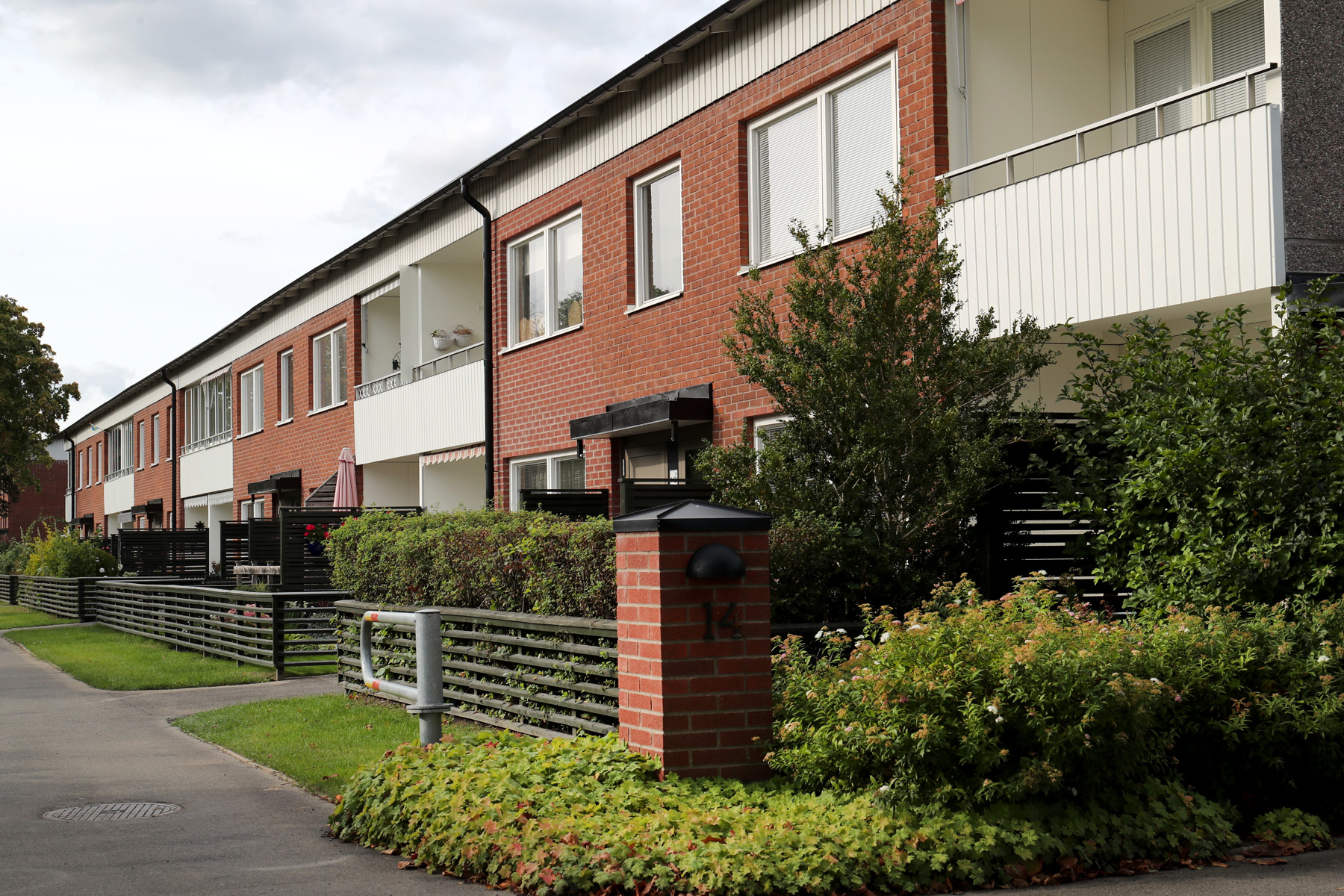
2025 – and beyond: Pilot projects using AI control
In 2025, Skövdebostäder launched a pilot project in which we use AI technology to control the indoor temperature in some of the buildings on Spånvägen in Ryd. The goal is to save energy and provide our tenants with a more comfortable indoor climate. The system uses weather forecasts and gradually learns how the buildings respond to temperature changes.